
In this article
A thermography audit uses an infrared camera to find hot spots in live electrical equipment before they turn into a breakdown or a fire. The survey itself is quick. The part that matters is the report: it tells you what is overheating, how serious it is and what to do about it. This guide explains what a good thermography report contains and how to read it, so you can act on it with confidence.
What a thermography audit checks
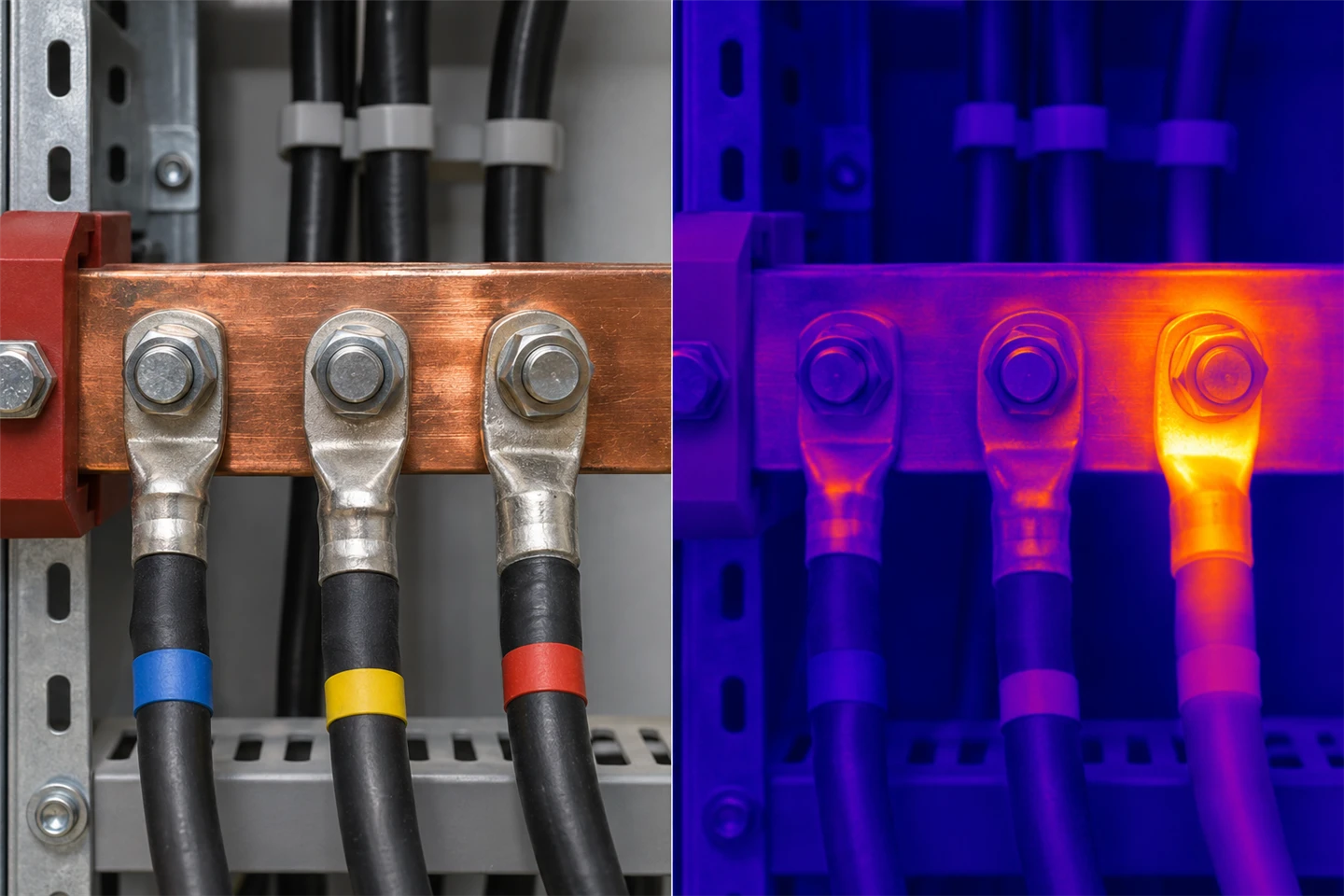
Electrical faults produce heat. A loose lug, a corroded joint or an overloaded cable adds resistance, and resistance turns current into heat. That heat builds up for weeks or months before anything trips, which is exactly the window a thermal camera can use. A typical survey covers:
- Main LT panels, MCCBs, ACBs and busbar joints
- Cable terminations and lugs, especially on high-current feeders
- Motor control centres, contactors and fuse holders
- Transformer connections and capacitor banks
- UPS input and output terminals, DC links and battery terminals
- Distribution boards in server rooms, hospitals, labs and production lines
How the survey is done
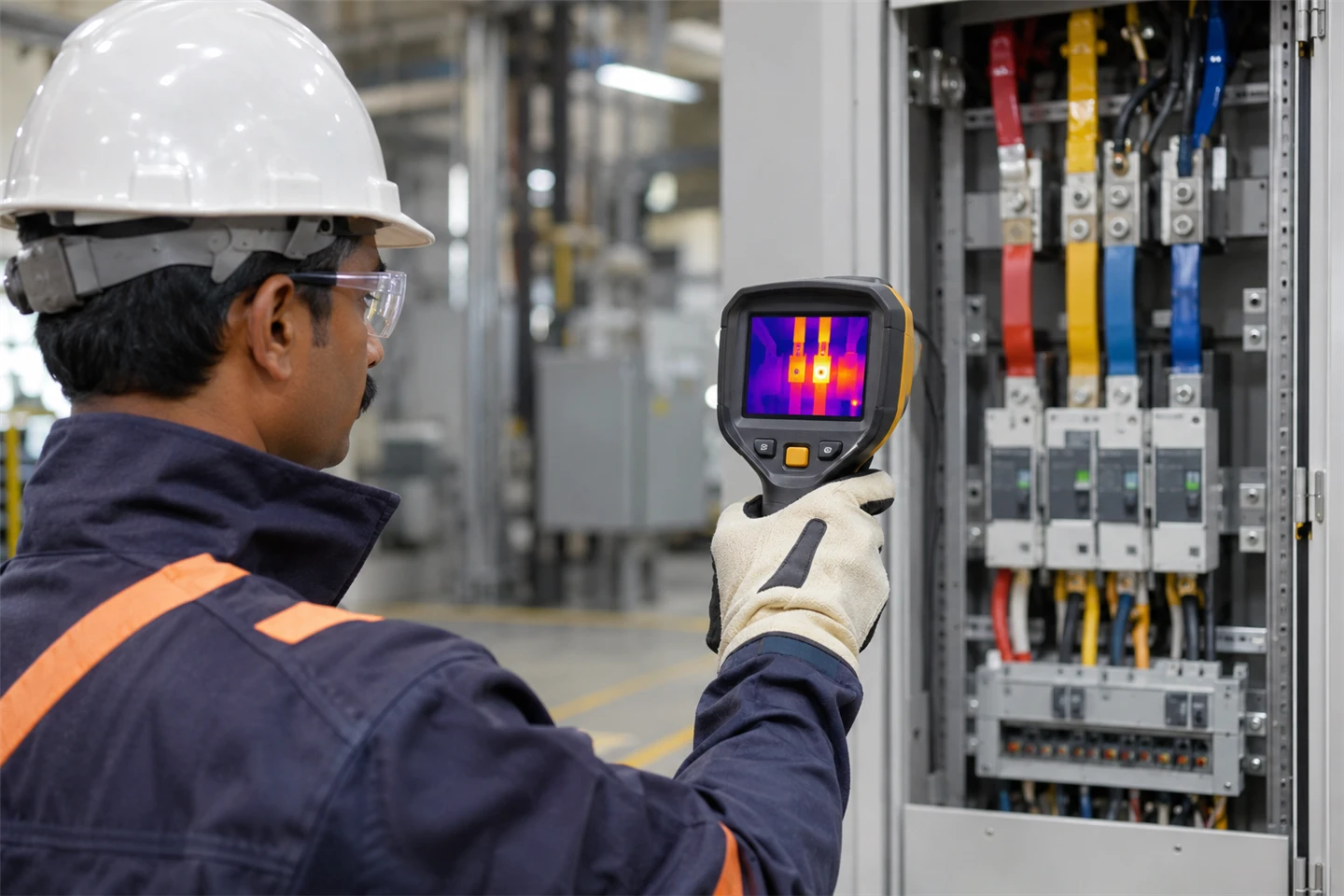
- Plan and make it safe. Panels have to be opened by authorised staff, with the right PPE and arc-flash precautions. The equipment stays energised, so access is planned with your electrical team.
- Scan under normal load. A fault only heats up when current flows. A panel running at a low load can hide a problem, so surveys are best done at normal or high operating load (many guidelines suggest at least 40 percent of rated load).
- Capture thermal and visible images. Every finding is recorded as a pair of photos, the thermal image and a normal photo, so anyone can find the exact spot.
- Record the conditions. Load at the time, ambient temperature, camera settings (emissivity) and the temperature of a similar healthy component for comparison.
- Analyse and classify. Each hot spot gets a temperature difference and a severity level.
- Report and re-check. You receive the findings with recommended actions. After repairs, the same points should be scanned again to confirm the fix.
What a good thermography report contains
Ask to see a sample report before you hire anyone. A useful one has these parts:
| Section | What it tells you |
|---|---|
| Scope and summary | Which areas and equipment were scanned, the date, and how many findings fall in each severity level. |
| Finding list | Each issue with a number, location, equipment name and phase or circuit. |
| Thermal and visible photo | Where exactly the hot spot is, and what it looks like in normal light. |
| Temperature and reference | The hot spot temperature, the temperature of a comparable healthy part, and the difference (ΔT). |
| Conditions | Load at the time of the scan, ambient temperature and camera settings. |
| Severity rating | How urgent it is: monitor, repair soon or repair now. |
| Recommended action and priority | What to fix (for example clean and re-tighten a joint, rebalance a load, replace a worn breaker). |
| Re-inspection result | The same point after repair, to prove the problem is gone. |
How to read the numbers
The key number is ΔT (delta T): how much hotter a component is than a comparable one, such as the same joint on another phase carrying similar current. It matters more than the absolute temperature, because it removes the effect of room temperature. One commonly used guideline, based on NETA maintenance testing practice, looks like this:
| ΔT versus a similar component | Usual meaning | Typical action |
|---|---|---|
| 1 to 3 °C | Possible problem | Watch it and re-scan at the next survey |
| 4 to 15 °C | Probable problem | Plan the repair soon, at the next planned shutdown |
| Above 15 °C | Serious problem | Repair as soon as it is safe to do so |
Three cautions when you read a report. First, the limits differ between standards and company policies, so check which scale the report uses. Second, a reading taken at light load understates the problem: a joint that is 8 °C hotter at 40 percent load can be much worse at full load. Third, the temperature rating of the cable insulation or the device still matters, whatever the ΔT.
Common findings and how they are fixed
- Loose or corroded lug or busbar joint: isolate, clean and re-tighten to the manufacturer’s torque value.
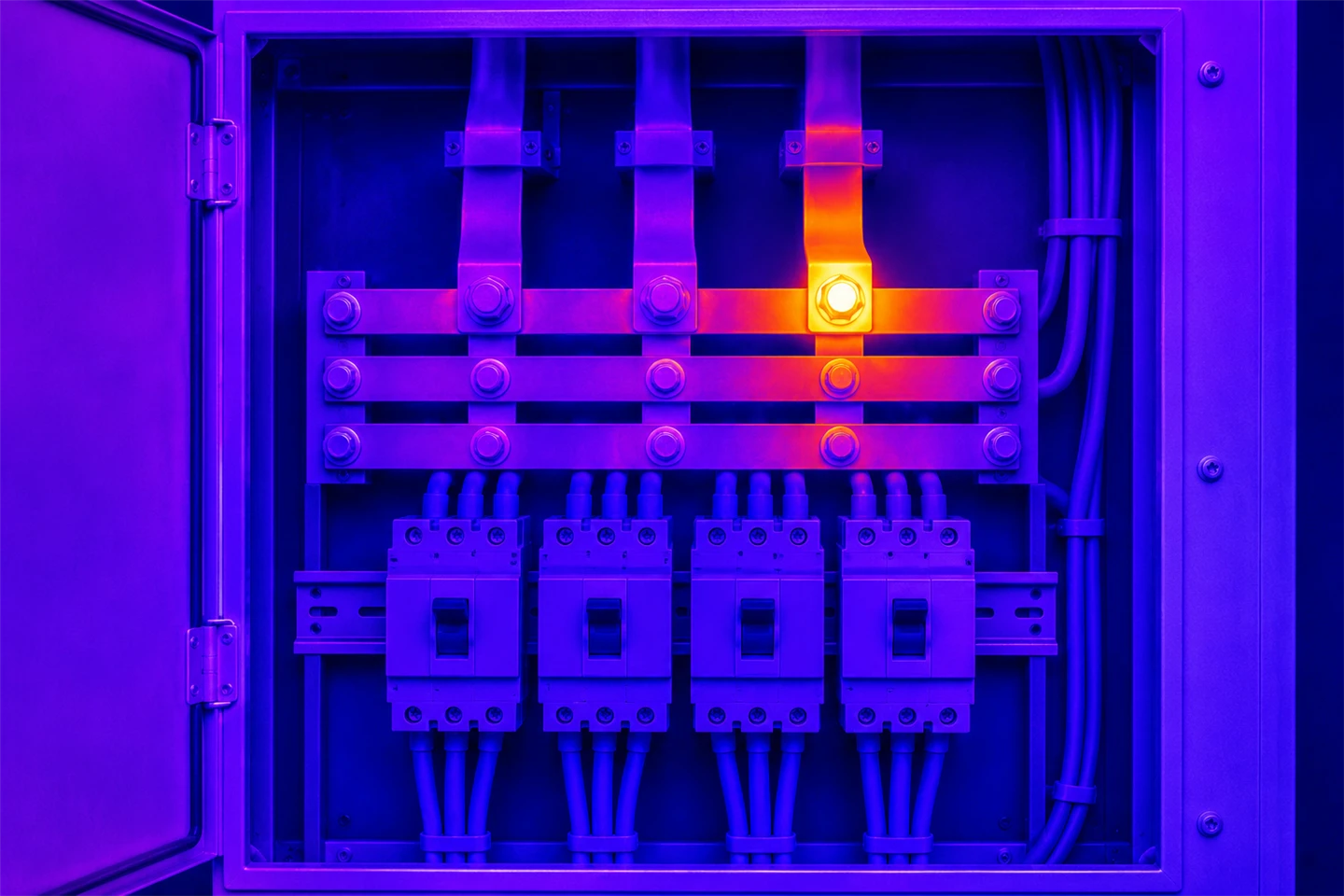
- One phase much hotter than the others: usually an unbalanced load or a poor connection on that phase, so rebalance the load and check the joint.
- Overloaded breaker or cable: spread the load across circuits, or upgrade the breaker and cable.
- Worn contactor or breaker contacts: replace the part before it welds or fails.
- Hot battery terminal or link in a UPS: clean and re-torque the connection, then check the battery. See our guide to signs your UPS needs maintenance.
Repairs should only be done by a qualified electrician with the circuit isolated and locked out.
What thermography cannot tell you
A thermal camera sees surface heat. It cannot see inside a sealed enclosure through a closed door, it cannot find a fault in a circuit that is not carrying current, and shiny metal surfaces can give misleading readings if the settings are wrong. It also says nothing about earthing quality, insulation condition or harmonics. That is why it works best alongside an electrical safety audit and a power quality audit. For the full picture of how these fit together, read our guide to power audits.
How often should you do it?
Once a year is a sensible starting point for most factories, hospitals and commercial buildings. Critical sites such as hospitals, data rooms and continuous-process plants benefit from more frequent checks. Also scan after a major load change, after repairs, and before the summer peak, when your equipment runs at its highest load. Comparing each year’s report with the last shows which joints are slowly getting worse.
Questions to ask before you hire
- Is the thermographer trained and certified, and is the camera calibrated?
- Will the scan be done under normal load, and will the load be recorded?
- Does the report include thermal and visible photos, ΔT, severity and a clear action for every finding?
- What is the safety plan for opening panels?
- Is a re-scan after repair included or available?
Frequently asked questions
Do we need to shut down for a thermography audit?
No. The equipment is scanned while it is running under load, which is the whole point. Panels do need to be opened safely by authorised staff, so access is planned in advance.
How long does a survey take?
It depends on the number of panels and how easy they are to reach. A single building is often covered in a day or less. A large plant takes longer.
Does thermography replace other electrical audits?
No. It finds heat-related faults in live equipment. Safety, power quality and energy audits answer different questions, and the findings support each other.
Book a thermography audit
Shakti Power Solutions carries out thermography audits for factories, hospitals, institutions and commercial buildings across Punjab, Chandigarh and Delhi NCR. You get a clear report, not just a set of photos. See the thermography audit service or call us on +91 98723 78585.